
How do I get pregnant? Everything you need to know with secrets and tips

Everything women need to know when trying to have a baby
Many couples who are trying for a baby often believe that they will see a positive pregnancy test and achieve conception on the first or second attempt. When that doesn’t happen, the man may worry because he ejaculates inside but his wife doesn’t get pregnant, and the woman becomes anxious because she is not conceiving.
Why am I not getting pregnant even though I’ve been trying for about 8 months, 6 months, or even a year? Why does he finish inside but I’m not getting pregnant? These are questions that often cross the minds of couples trying to conceive.
If you are in this category but pregnancy hasn’t happened yet, just relax. It may simply take a little more time for conception to occur.
- Are you trying to copy another couple who conceived easily?
- Are you not having intercourse on your fertile days?
- What can you do to help conception?
- When should you visit your gynecologist?
- Could you be doing something wrong without realizing it?
- How long will it take?
- What other factors play a role?
Let’s look at all these — and much more — in detail:

First of all, don’t look at what others are doing!
The general rule says that for women under 35, it’s recommended to try conceiving for twelve consecutive months before seeing your doctor. After the age of 35, contact your gynecologist if you haven’t conceived within six months. In this rule, we’re referring to conception, not the continuation of pregnancy. For example, if a miscarriage occurs, it is still considered a successful conception.
Pregnancy doesn’t happen the same way for every woman.
When it comes to conception, every couple is different. Some conceive on the first attempt — some women even get pregnant without full ejaculation inside — while others may try for months without success. Couples who try for months without results often wonder if something is wrong, and the woman worries that she cannot get pregnant. That’s not necessarily the case.
Remember that conception is never guaranteed nor subject to statistics. Don’t compare yourself to others. Some people conceive easily, while others need more patience and persistence.
Fortunately, there are things you can try to make your dream come true and hold your little baby in your arms.
The secret is to have intercourse during the fertile days
To get pregnant, you need an egg and a sperm cell. The sperm must travel to the fallopian tube, find the egg, penetrate it, and fertilize it. Producing sperm is easy — it happens with every ejaculation. Releasing an egg, however, happens only once per month, during each menstrual cycle. The process of releasing the egg is called ovulation. Immediately after ovulation begins the woman’s fertile window. Therefore, the highest chances of successful conception occur during this fertile window. There are several ways to find out when your fertile days — that is, your ovulation — occur.
The easiest and most reliable method is ovulation tests.
(See also: I want to get pregnant – how can ovulation tests help?)
Ovulation tests are done daily. You start on a specific day depending on your cycle length and stop when you get a positive test. Begin intercourse the day of your first positive ovulation test and continue for the next two days. This way, you maximize your chances of getting pregnant.

So what can you do to help conception?
What should I do after intercourse to get pregnant? Why am I not conceiving — am I doing something wrong? These are questions almost all women trying to conceive ask.
As mentioned, pregnancy happens differently for every woman. This is the golden rule you should always keep in mind.
You may feel pressure from family or friends, or find yourself comparing to those who conceived easily. Try to change that mindset.
Together with a positive mindset, you can follow these steps:
- Relax: The first thing you need to do is relax. Constant worry adds stress to your body and can actually make conception harder. Chronic stress can disrupt your cycle and lower sperm quality.
- Track your cycles: If you haven’t already, start now. Track your periods for at least the past year. Count the days in each cycle (from the first day of one period to the first day of the next). See if your cycles are regular or irregular.
- Make sure you identify your fertile days each month: These are the only days when conception can happen. As mentioned, the easiest and surest way to find them is with ovulation tests. Intercourse during months when you didn’t confirm ovulation shouldn’t count toward your “unsuccessful attempts.”
- Check your partner’s sperm: Around 50% of infertility cases are due to male factors. Every man should test his sperm to confirm fertility and check his prostate, especially after age 30.
- Don’t have intercourse daily: Having sex every day can create pressure and reduce sperm count and quality. Use ovulation tests to find your fertile days and focus efforts on the day of your positive test and the next two days.
- Improve your diet: Focus on a balanced diet with plenty of fruits and vegetables, and avoid smoking, alcohol, and toxins. Both obesity and being underweight can reduce fertility. Maintain a healthy BMI and exercise moderately.

If you’ve tried everything without success, visiting your gynecologist is the next step
There’s no reason to delay this visit. An opinion or examination by a specialist won’t hurt, whether there’s a problem or not.
If you’ve been trying for a year, accurately tracking ovulation, your partner’s sperm is fertile, yet you haven’t conceived, it’s time to see your gynecologist for evaluation and possible tests or treatments.
Yes, a fertility specialist can help you.
Many negative pregnancy tests don’t mean you’ll never become parents — it might just mean you need professional help. The doctor can check for STDs, hormone levels (including thyroid), ferritin, prenatal screening tests, and perform an ultrasound. Depending on the findings, the appropriate measures can be taken.
The 5 most common mistakes couples make when trying for a baby
We asked experts what the most common mistakes are among couples trying to conceive, and here’s what they said:
1. Timing: There’s a myth that ovulation happens in the middle of the cycle, so couples often focus intercourse then. That’s only true for 28-day cycles. Because ovulation occurs about 14 days before the next period, couples should use ovulation tests to pinpoint the right time for intercourse.
2. Too frequent intercourse: Daily intercourse can actually reduce fertility, as it lowers sperm count and quality. A few days of abstinence restore optimal sperm. Find your ovulation day using our ovulation tests and focus efforts then.
3. Bad habits: Smoking, alcohol, poor diet, lack of sleep or exercise, excess weight, and high caffeine intake all negatively affect fertility.
4. Obsession with positions: There’s no “correct” position. Strong sperm can swim through the cervix regardless of position.
5. Delaying parenthood: Modern couples often postpone having children due to career or social reasons. However, fertility decreases with age — so if you feel ready, don’t delay!
How long will it take?
Repeated unsuccessful attempts can be emotionally exhausting. Social pressure adds stress, which further affects fertility.
Infertility is defined as the inability to conceive after 1 year of unprotected intercourse for women under 35, or 6 months for women 35 and older.
If you’re having trouble conceiving, you’re not alone. Below are the most common reasons it may take longer to get a positive test.
It just takes some more time
I found my ovulation! Why didn’t I get pregnant this time?
Like everything in life, fertilization is a matter of probability. Finding ovulation is the first step. Researchers estimate about a 23–25% chance that intercourse will lead to conception in any given cycle.
Don’t give up and don’t get discouraged after 1–2 failed attempts, even if you timed ovulation correctly. Each couple is unique — continue trying, and if there are no underlying issues, pregnancy is a matter of time.
Also, if you’re over 38 (or your partner is over 40), it may take longer, because egg quality declines with age.
Women are born with a set number of follicles (which contain eggs), known as the ovarian reserve. We start with about two million follicles, but many are lost before puberty. With each cycle, the number declines — especially after age 37.
So listen to your biological clock and don’t postpone pregnancy plans, especially if you’ve never been pregnant before.

Could you not be ovulating?
If you’re not ovulating, pregnancy cannot occur. Assuming you’re of reproductive age and not menopausal, ovulation can be disrupted by several factors. Here are some of them:
Polycystic Ovary Syndrome (PCOS) is one of the main causes of ovulation problems. Diagnosis should always be made by a gynecologist.
Other causes that can prevent or disrupt ovulation include being overweight or underweight, premature ovarian failure, thyroid disorders (such as Hashimoto’s), hyperprolactinemia (high prolactin levels), low progesterone, or excessive exercise.
In most cases, women with ovulation issues have irregular cycles — though sometimes ovulation problems occur even with regular ones.
Maybe it’s not you
As mentioned earlier, for conception to occur there must be two players: the egg and the sperm cell. If you ovulate normally but sperm count or quality is low, conception may take longer.
According to studies, 40–50% of conception and infertility problems are due to male factors.
Unlike female infertility, where cycle instability is an obvious factor, in the case of men, if there is an infertility problem in the sperm, in most cases there is no obvious symptom. The only way to find out is to have the sperm checked, with a male fertility test, to measure its quality.

Possible problems with the fallopian tubes
The fallopian tubes play a very important role in the process of conception.
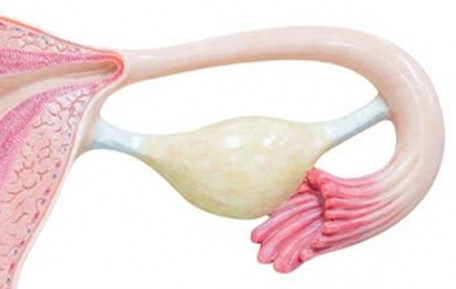
The fallopian tube is a small tube that connects the ovary to the uterus. The egg is released from the ovary, moves into the fallopian tube, and begins its journey toward the uterus. On the other hand, the sperm that survive after ejaculation — after passing through the cervix and the uterus — swim in order to reach the fallopian tube, where they wait for the egg to fertilize it. Then, the now fertilized egg travels to the uterus and attaches to its wall, beginning the process of pregnancy.
If the fallopian tube is blocked (non-patent), this entire process is disrupted. In other words, if the tubes do not function properly or if something prevents the sperm and the egg from meeting, pregnancy cannot occur.
Blocked fallopian tubes usually cause mild or severe pain, but there are also cases where no symptoms appear at all.
Only an examination by a gynecologist called a hysterosalpingography can reveal whether your fallopian tubes have a problem or not.
Other factors that may play a role
There are several additional factors — sometimes less common but real — that can interfere with getting pregnant. These include: endometriosis, uterine fibroids, sexually transmitted infections (which can leave lasting damage), thyroid problems, hormonal imbalances, diabetes, and more. Stress and anxiety also negatively affect female fertility.
All of the above should be discussed with your gynecologist.
There is also the term “unexplained infertility”. Doctors use this when a couple “does everything right” and no specific cause is found, yet they are unable to conceive.
Also, pay attention to unhealthy habits: conception and pregnancy require a healthy body. Protect your body! — Avoid bad habits, quit smoking completely, reduce alcohol consumption, increase intake of fruits and vegetables and other healthy foods, limit processed foods (especially those high in trans fats), find time for exercise, reduce sedentary hours, and address sleep disorders.
Give your body good health and it will reward you.
Some interesting final facts:
According to a study published in the journal BMJ:
- 30% of couples trying to conceive succeeded in the first month.
- 75% of couples conceived within 6 months.
- 90% of couples conceived within 1 year.
- 95% of couples conceived within 2 years.
According to another study from a German institute, researchers found these pregnancy rates for couples actively trying to conceive:
- 38% conceived in the first month.
- 68% conceived within 3 months.
- 81% conceived within 6 months.
- 92% conceived within 1 year.
While these statistics are valid as general indicators, they should only be used as a guideline and not treated as absolute limits for any single couple. Note that fertility statistics vary not only between different couples but also between different pregnancies for the same couple. For example, conceiving quickly for a first child does not guarantee the same timing for a second child — the second may well take a year and still be normal.
When couples begin trying for a baby, many expect immediate success. In a study of 1,400 women, 44% reported that it took longer than they had expected.
_______________________________________________________________________________________
In general, as we said at the start of the article, you should begin by identifying your ovulation and focus intercourse on your fertile days, then let your body do what it naturally does. Over the years we have seen hundreds of pregnancies where women never thought they would succeed. It takes patience, persistence, and method. The desired result may be closer than you think.
--------------------
See all blog posts by clicking here.
0 comment(s)