
Feeling like I'm pregnant: Is it true?

If you’re trying to have a baby, you’ve probably talked to many moms who told you they knew they were pregnant even before confirming it with a test.
This gut feeling of “I’m pregnant” is something deeply personal and certainly not scientifically proven, yet more and more women talk about experiencing it.
Is it real? Does it make sense to take it seriously—and when does a woman usually feel it?
What is the pregnancy intuition
Many mothers still describe, even years later, with chills, how they somehow knew they were pregnant before seeing a positive test result.
It’s that sense that a new life is growing inside your body—something almost supernatural that may not have scientific proof, but does have some biological basis.
Science describes a remarkable and emotional phenomenon known as fetal microchimerism. Fetal microchimerism is the process by which cells from the fetus pass through the placenta (or the trophoblast in early pregnancy) into the mother’s bloodstream and settle in her tissues, where they can remain for decades. These cells can differentiate and may contribute to organ repair after injury, giving the mother–child bond an astonishingly biological dimension.
In fact, fetal cells can be detected in the mother as early as the 4th week of pregnancy (around the time of the first missed period), so it’s not surprising that some women report “feeling” their baby within the first days.
The first signs of pregnancy
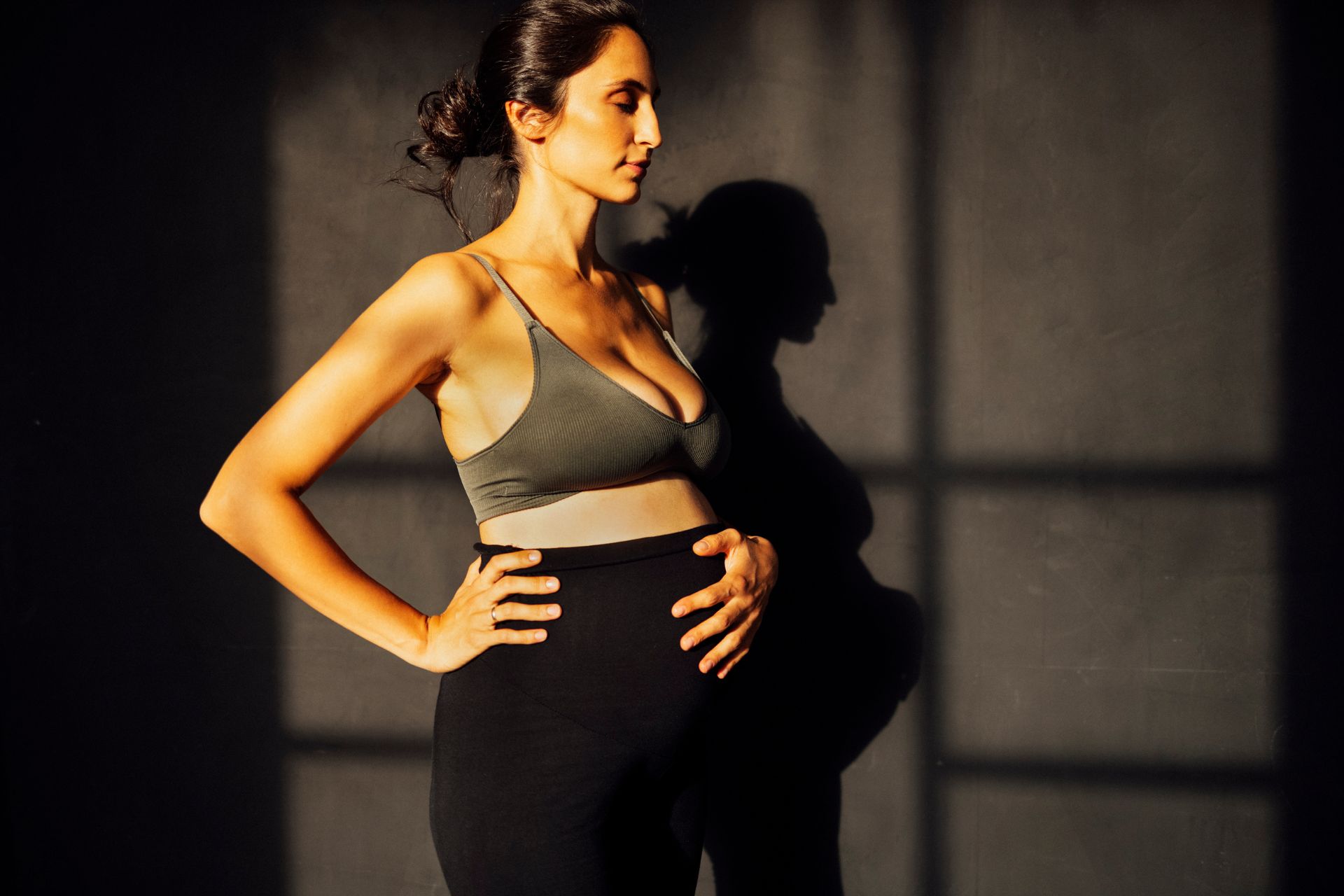
Of course, pregnancy intuition is not a physical pregnancy symptom, like the following:
- Missed period
- Breast tenderness
- Nausea
- Food cravings
- Fatigue
- Implantation bleeding
In fact, the intuition that you’re pregnant is something you might feel long before the first pregnancy symptoms appear. You might feel it as early as the 3rd or 4th week, just after implantation, when the embryo begins to develop within the uterine lining.
See also: Tricks to see if you’re pregnant: How reliable are they & what to choose
Psychological factors that affect intuition
It’s definitely hard to tell whether you’re really having an intuition or if it’s just other emotions that feel similar.
If you deeply wish for a baby, hope and anticipation for a positive pregnancy test can easily make you believe you’re pregnant.
On the other hand, if you don’t wish for a pregnancy, anxiety might make you overreact or misinterpret sensations.
However, many women who had been trying to conceive for months or years say that the month they finally succeeded, they felt something “different” compared to all previous times.
In any case, a reliable pregnancy test, such as the pregnancy tests by HomeTest, can show you with 100% accuracy if you’re pregnant—even from the very first days. You just need to be a little patient until your expected period date (or 2–3 days before) to know for sure.
See also: The 5 Best Pregnancy Tests for 2025: The HomeTest Guide
0 comment(s)