
Pregnancy test after IVF, embryo transfer or insemination: When should I do it and which one should I choose?

The days or weeks of waiting after assisted reproduction treatments are filled with anticipation, anxiety, and many questions about the next step. One of the most common is: When is the right time to take a pregnancy test after IVF, and which test provides a reliable result?
Whether it is in vitro fertilization, embryo transfer, or intrauterine insemination, it is very important to have the right information so that you can obtain accurate results and reduce your stress as much as possible.
Below you can read everything about pregnancy testing after embryo transfer or insemination, so you know exactly what to expect and what to choose for the fastest and most reliable results.
What happens after IVF, embryo transfer, or insemination?
Each assisted reproduction method has a different timeline before the pregnancy hormone (hCG) can be detected and therefore before a pregnancy test can provide a reliable result.
After In Vitro Fertilization (IVF)
In vitro fertilization involves fertilizing the egg in the laboratory and transferring the embryo to the uterus. Therefore, after embryo transfer, time is required for implantation and the subsequent production of the hCG hormone.
The beta human chorionic gonadotropin (β-hCG) is the hormone produced after implantation and is the primary indicator of pregnancy.
Usually, it is recommended to wait 10–14 days before taking a pregnancy test so that hCG levels after IVF are sufficient for a reliable result.
The most important factor in determining exactly when to take a pregnancy test after IVF is whether the embryo transfer was performed on day 3 or day 5.
After Embryo Transfer
The timing of pregnancy detection is influenced by the age of the embryo at the time of transfer. During IVF treatment, embryo transfer may be performed with an embryo that has developed in the laboratory either 3 days or 5 days after fertilization.
- Day-3 embryo: It requires more time to reach the implantation stage after embryo transfer (3–5 days).
- Day-5 embryo (blastocyst): It is closer to the implantation stage, which usually occurs within 1–2 days.
From the moment implantation occurs, hCG production begins. However, a pregnancy test after embryo transfer should wait a little longer—specifically 7–10 days after implantation—so that hCG can be detected in urine.
Therefore, a pregnancy test with a 3-day embryo is usually taken about 12–15 days after embryo transfer, while a pregnancy test with a 5-day embryo is taken about 10–12 days after embryo transfer.
After Intrauterine Insemination (IUI)
Intrauterine insemination places sperm directly into the uterus during the ovulation period.
Ovulation usually occurs 24–36 hours after it is triggered (if medically induced). If ovulation is not triggered, it occurs 24–36 hours after a positive ovulation test. At the same time, an ultrasound examination is usually performed to measure the follicle size so that the doctor can determine when rupture and ovulation will occur.
If fertilization occurs, implantation happens approximately 6–10 days later, at which point beta-hCG production begins.
But when should you take a test after IUI?
A pregnancy test after insemination can reliably be taken once hCG can be detected in the body, which is about 10–14 days after ovulation, similar to natural conception.
When is the right time to take a pregnancy test?
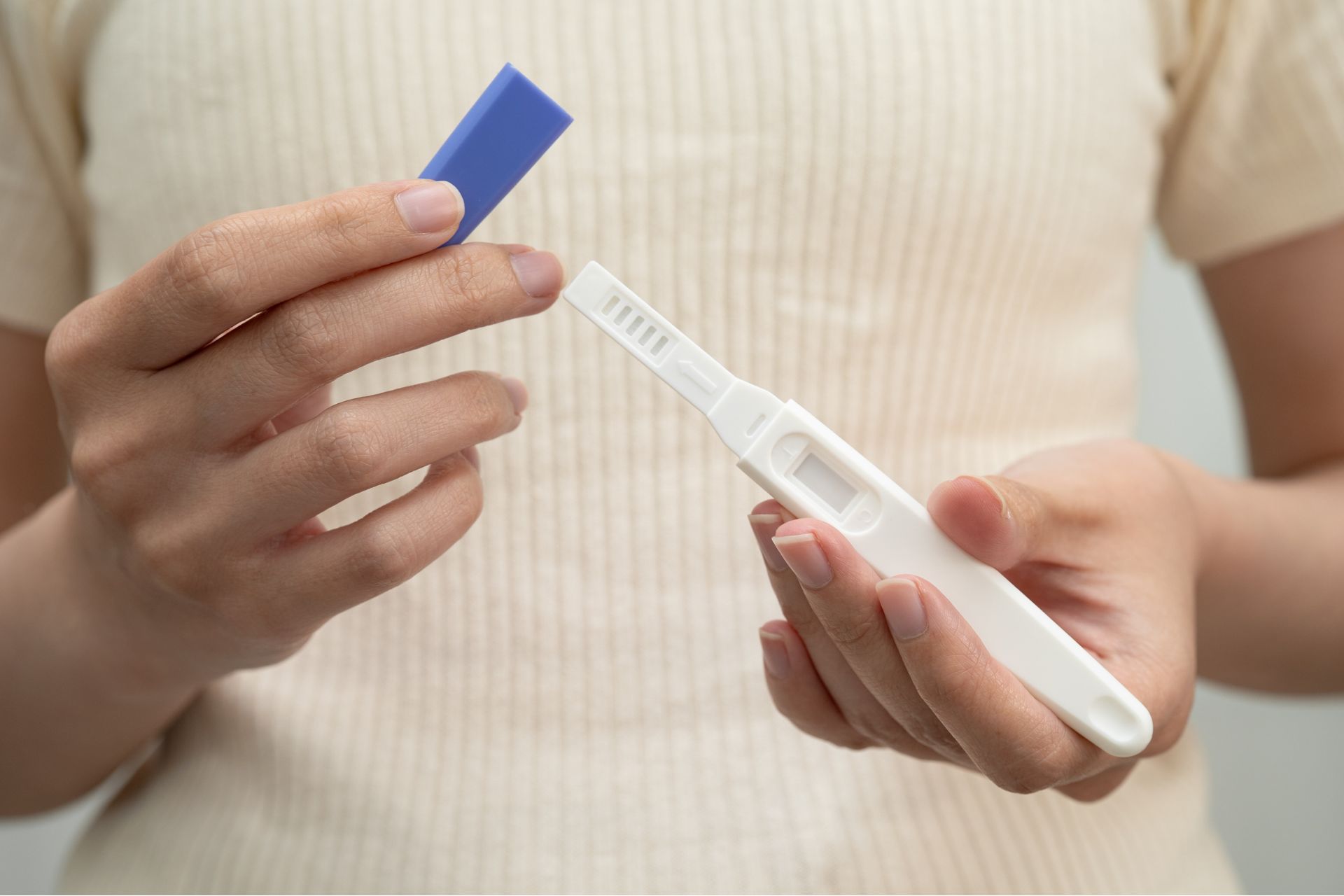
The correct timing is crucial to avoid a false negative result.
| Procedure | When to take the test |
| IVF | 10–14 days later |
| Day-5 embryo transfer | 9–12 days later |
| Insemination | 14 days later |
Which pregnancy test is suitable after IVF?
Choosing the right test can reduce uncertainty and provide more reliable results.
Tests that show two lines in case of a positive result (midstream tests) are considered the most suitable after IVF because you can monitor the progression of the lines and see whether the second line becomes darker, which indicates that the pregnancy is progressing well with increasing hCG levels.
At Hometest you can also find such tests in strip form, which are the most economical solution and particularly useful for repeated testing.
Specifically, their use is recommended when:
- you want to monitor the daily progression of the second line.
- you plan to perform repeated tests.
- you are looking for an affordable option.
See: The 5 Best Pregnancy Tests for 2025: The HomeTest Guide
Can hormonal treatment affect the result?
In assisted reproduction cycles, an hCG injection (trigger shot), such as Pregnyl or Ovitrelle, is often used to induce ovulation.
Exogenous hCG is gradually eliminated from the body and may remain in the system for up to 8–10 days. Therefore, if you take the test within this period after ovulation induction, it may cause a false positive result.
It is therefore advisable to avoid testing too early after the injection, as the test may detect the hormone from the medication rather than pregnancy.
When should I do a beta-hCG blood test instead of a urine test?
The beta-hCG test is a blood test that accurately measures hCG levels.
Unlike urine tests, it can detect pregnancy earlier (even during the first days) and provides a quantitative result with a specific hormone concentration per mIU/ml.
Doctors usually recommend it 10–14 days after embryo transfer for reliable and quantitative confirmation.
In any case, the beta-hCG test should be performed if the urine test is positive, so that with two tests 48 hours apart it can be confirmed whether hCG levels are doubling, as doubling indicates normal pregnancy progression.
Frequently Asked Questions
Can I take a test 7 days after embryo transfer?
It may be too early for a reliable result, as implantation may not yet be complete and hCG levels may still be low.
If the test is negative but I still haven’t had my period?
In this case, the test may have been taken too early. It is best to repeat it after a few days, always according to your doctor’s instructions.
Which pregnancy test is the most reliable?
The beta-hCG blood test provides the highest reliability, but all Hometest pregnancy tests are also 100% reliable from the first day of a missed period.
Should I use first-morning urine?
Yes, especially in the early stages, because the concentration of hCG is higher.
Can you get a positive test without being pregnant? What you need to know
How can I reduce stress until the test?
The two-week waiting period is very stressful for every woman, especially for someone who has gone through the emotionally demanding process of assisted reproduction.
If you feel intense anxiety and impatience, some helpful tips include:
- avoid taking tests constantly, as this increases stress.
- engage in light daily activities and exercise according to your doctor’s instructions.
- talk about your concerns with people you trust.
In any case, trusting medical guidance can significantly reduce stress.
Conclusion – Which test should I choose?
The right timing and the appropriate test make the difference in the reliability of the result.
- If it is early after the procedure → High-sensitivity test
- If you want a clear result without doubts → Digital test
- If your doctor requests confirmation → Beta-hCG blood test
See all the 100% reliable pregnancy tests at HomeTest and choose the one that suits you with confidence and peace of mind.
We wish you the best results!
0 comment(s)