
Fertility and Ovulation: The Complete Guide to the Fertile Window

Ovulation is directly related to fertility, as conception can occur during the so-called “fertile window,” when the egg is released from the ovary and travels toward the fallopian tube.
So, if you are trying to get pregnant and want to dramatically increase your chances in each cycle, it is extremely important to know what the fertile window is, when it occurs, and how you can detect it using the 100% reliable ovulation tests from Hometest.
Read below the complete guide to the days when pregnancy chances are at their highest.
What ovulation is and how the female cycle works
Ovulation is the release of an egg from the ovary, so it can wait in the fallopian tube for fertilization by sperm.
Ovulation is the third stage of the female cycle, which consists of the following phases:
- Menstrual phase: The body sheds the endometrium when fertilization has not occurred.
- Follicular phase: The ovaries prepare an egg, while estrogen increases to support endometrial growth.
- Ovulation: The mature egg is released and can be fertilized for 12–24 hours.
- Luteal phase: Progesterone rises to support a possible pregnancy; if none occurs, hormone levels drop and the cycle starts again.
Therefore, fertilization occurs during ovulation, which lasts only a few hours, making it crucial for intercourse to take place within the “fertile window,” as we will explain below.
The fertile window: When the most fertile days occur

Ovulation occurs once a month, roughly in the middle of the cycle, and the egg remains viable for about 24 hours after being released. Sperm, on the other hand, can survive for a few days in the female reproductive system, with the highest count and motility for 2–3 days.
Thus, it’s extremely important to know when you ovulate. This way, you know the two days when you are most fertile — the day before ovulation and the day of ovulation. Intercourse during these days greatly increases the chances of conception.
How to detect your fertile window
But how can you know when your ovulation occurs and therefore when your fertile window is?
There are three main methods.
Tracking your cycle days
The easiest approach is to track your cycle so you know what happens in your body day by day. Ovulation occurs 14 days before the next period, so if you have a regular cycle, you can calculate this.
The problem is that every cycle is unique. A previous cycle might have lasted 30 days while the next one may last 27 or 28. That means you could easily miss ovulation.
This method is recommended only for women with perfectly regular cycles who know exactly when their next period will arrive and therefore when ovulation — 14 days prior — will occur.
Ovulation symptoms
The main ovulation symptoms include:
- Breast pain or tenderness
- Abdominal or lower back pain, usually on the side of the ovary preparing to release the egg
- Slight increase in body temperature
- Increased libido
So you can estimate fertile days by carefully observing your body and any symptoms.
However, not all women experience ovulation symptoms, and not every cycle presents the same signs. In some cycles, you may have no symptoms at all or confuse them with other sensations and miss ovulation.
Using ovulation tests
Ovulation tests work in a very simple way. They detect the surge of LH (luteinizing hormone), which occurs 24–36 hours before ovulation. This allows a woman to know precisely when ovulation is approaching so she can plan intercourse and significantly increase her chances of pregnancy.
Read below everything you need to know about this innovative and 100% effective way of detecting ovulation.
How ovulation tests work
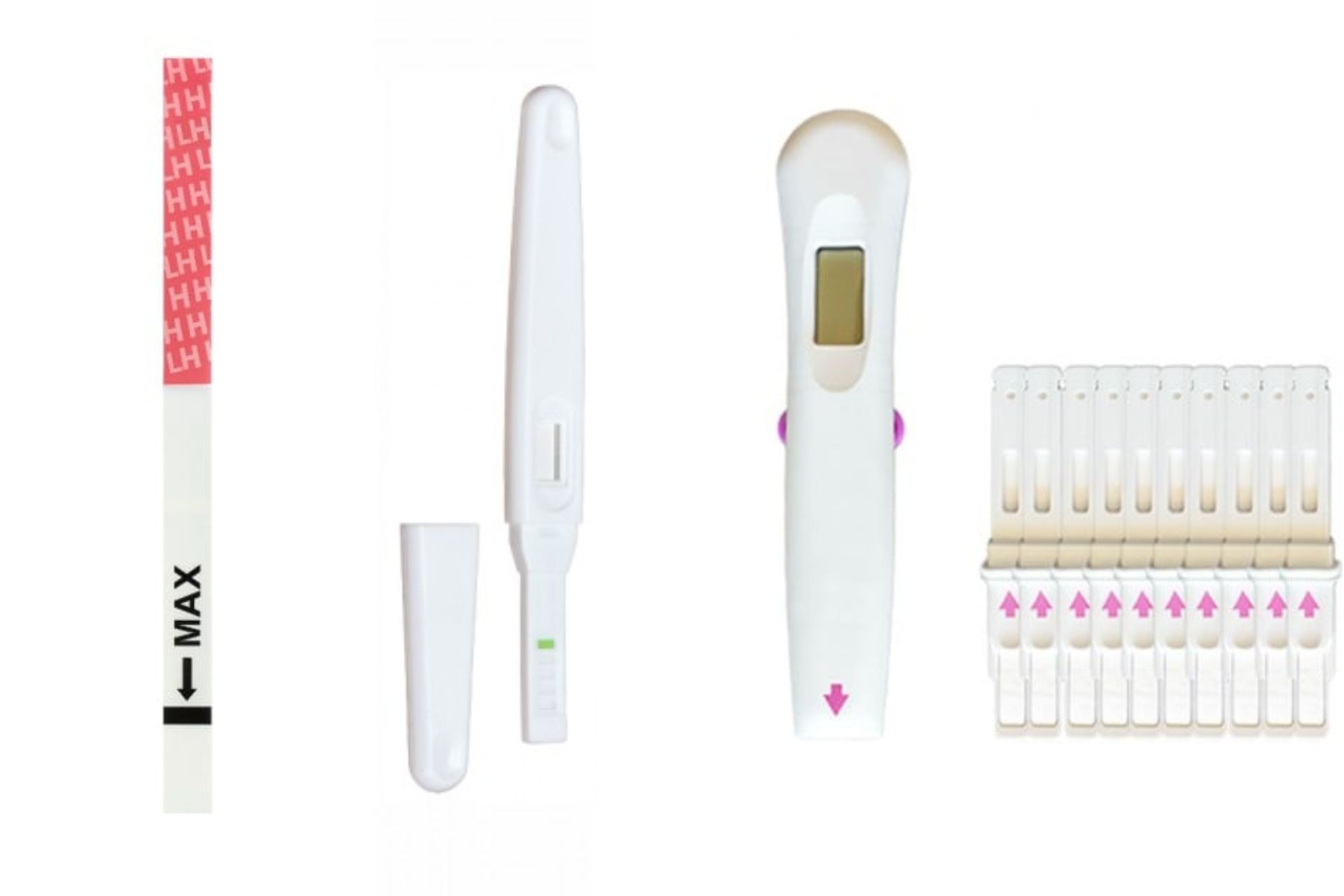
The defining sign of ovulation is the sudden rise in LH levels, signaling the ovary to release the egg.
This LH surge can be detected in urine, which is exactly what ovulation tests do. This way, a woman can know one day in advance when she will ovulate, so intercourse is recommended on that day and the next.
Using ovulation tests is the most reliable method to increase your chances of pregnancy, without relying on ovulation symptoms that can be uncertain or inconsistent.
The three types of ovulation tests
Digital ovulation test
The simplest to use, the digital ovulation test detects LH — the ovulation hormone — and shows YES/NO depending on whether the surge has occurred and ovulation is expected in the next 24–36 hours.
A major advantage is that it interprets the results for you, so you don’t need to judge how dark the line is or guess what it means. It only needs to be used once a day with morning urine, and it can be used in the urine stream or by dipping.
A disadvantage is that it is the most expensive type of test. However, Hometest allows you to buy the digital reader once and then replace only the strips, significantly reducing the cost.
Midstream ovulation test
These classic ovulation tests show one or two lines depending on the result. They are highly reliable because they allow you to track LH levels by observing whether the line becomes darker or lighter.
For women whose LH surge fluctuates, this monitoring can be very important to determine whether and when ovulation occurs.
Additionally, because midstream tests have plastic casing (like digital ones), they can be used in the urine stream as well as by dipping.
Ovulation test strips
For women with irregular cycles, it is recommended to start testing as early as the 6th day of the cycle to avoid missing ovulation. In this case, you may need to take 10–15 tests per month to find your fertile window.
Ovulation test strips are ideal for this situation. They work like midstream tests, showing one or two lines, with all the same advantages.
They are also very affordable, since they have no plastic casing and are sold in larger sets, making monthly costs very low.
However, because they have no casing, they can only be used by dipping — not in the urine stream — meaning they must be used at home.
How to use ovulation tests

The most effective way to use ovulation tests is with multipack strips that are very affordable.
Although ovulation typically occurs 14 days before the next period, many women ovulate earlier, so it's best to start testing right after your period ends.
Each day — ideally in the morning — you can take the test either by dipping or, if using tests with plastic casing, directly in the urine stream.
When the test becomes positive, it means ovulation will occur the next day. Intercourse is recommended on the day of the positive test and the day after to maximize chances of conception.
Common mistakes when using ovulation tests
The most common mistakes when using ovulation tests are:
- Testing at the wrong time: LH usually rises at midday. Morning testing may show a false negative. If you have irregular cycles, it's best to test twice a day.
- Misreading the lines: The test line must be as dark or darker than the control line. Faint lines do not mean a positive result.
- Inconsistent testing: Irregular testing reduces the chance of catching the LH surge. You must test every day at the same time until a positive appears.
- Not tracking cycles: You need a cycle log to know exactly when to begin testing.
How to increase your chances of conception
To increase your chances of conception each month and get pregnant faster, we recommend the following:
- Frequent intercourse: Frequent intercourse increases the odds and reduces stress while helping you bond with your partner. Ideally, no more than once per day so sperm can maintain optimal count and concentration.
- Know when you ovulate: Numbers don’t lie. The egg lives about 24 hours, and sperm lives 2–3 days. So intercourse should mainly happen the day before ovulation and the day of ovulation — something you can pinpoint accurately using ovulation tests.
- Avoid alcohol: Alcohol lowers egg quality and is prohibited during pregnancy because it can harm the fetus. Even if you cannot quit entirely, avoid alcohol between ovulation and your period — you might already be pregnant without knowing it.
- Healthy diet: A balanced diet rich in fiber and protein prepares your body for pregnancy. Fertility-boosting foods include leafy greens, shellfish, fish, eggs, and whole grains.
- Regular exercise: Light, consistent exercise — walking, jogging, cycling, swimming — improves blood flow, reduces stress, and strengthens your body for pregnancy.
When ovulation is delayed or does not occur
Unfortunately, you may use ovulation tests regularly and still not see a positive result.
The main causes include:
- Polycystic ovary syndrome (PCOS)
- High stress levels
- Hormonal imbalances
- Sudden weight loss
These are the most common reasons that can disrupt the cycle, delaying or preventing ovulation.
In these cases, the test may continuously show negative results or faint lines due to unstable LH levels.
If this continues for more than 2–3 cycles, it is recommended that you see your doctor for evaluation.
Frequently Asked Questions (FAQ)
- Can I have a positive ovulation test but not actually ovulate? Yes, this can happen. A positive ovulation test shows a rise in LH, but it does not always confirm that ovulation occurred. Temporary hormonal fluctuations can raise LH without an egg being released (for example, in polycystic ovary syndrome or in anovulatory cycles).
- Can I test every day? You should test every day starting from day 8 of your cycle until you get a positive result.
- What does it mean if I get many days of positive results? This usually means that LH levels remain elevated for longer than normal. That may happen in normal cycles where the surge lasts a bit longer, but it can also occur in conditions like PCOS where LH is chronically elevated and gives repeated positive results without ovulation. It can also be seen in unstable or anovulatory cycles when the body attempts to trigger ovulation but the process does not complete.
- How much does age affect fertility? The best age for pregnancy is generally between 20 and 30 in terms of conception probability. Up to age 35, a woman has roughly a 90% chance of becoming pregnant within one year of regular attempts. Unfortunately, these chances decline after 35, and especially after 40 the drop is significant. At 40 the chances are about 45%, while at 49 they are around 1%.
Therefore, it is extremely important to monitor your cycle consistently and use ovulation tests correctly to make the most of your fertile window.
See all the ovulation tests from Hometest and dramatically increase your chances of holding your baby in your arms soon!
0 comment(s)